
Lindsey Lomis shares how “Half of Me” felt like she was 13 again

Updated: 3 days ago

Lindsey Lomis has been writing songs since she was 12, and eleven years later she says it finally feels like the beginning. Her latest single, “Half of Me,” started the night she came home from a bar, sat at her piano and realized that none of the conversations she’d had could compare to the person she had just lost.
Born and raised in Nashville, now an independent artist after years on a major label, Lomis has opened for Tori Kelly and Joshua Bassett, sung on Jacob Collier’s Djesse Vol. 4 and played arenas with him, and she is heading back to the stage this November.
“This is the only thing that I’m put on this Earth to do.”
For me, this chat was the perfect moment to see how far I’ve come as a music journalist. The first concert I ever went to alone was Joshua Bassett’s Complicated Tour in Houston, with Lindsey as the opening act. I had studied her songs before the show, and I think I was one of the very few people singing along. Years later, I was also the only person screaming in a Bogotá venue when one of her songs came on Jacob Collier’s pre-show playlist. And today, it was her team that reached out to us to do this interview.
“Half of Me” and the people we don’t get over
Lomis explained that her newest single is based on a deeply personal real story... and she's almost certain he knows it's about him.
She began writing it after returning from a bar and sitting at the piano, feeling that no conversation could ever compare to those with her ex. Going out shortly after a breakup with the expectation of moving on made her realize how much of her own identity was tied to that person.
Tell us a little bit about how “Half of Me” came to be. How did you write it? Is it inspired by someone?
Unfortunately, it’s a very true story. All of my songs come from very real places, and this one is no different. I started writing it when I got home from the bar, sat down at my piano and thought, no one will ever be him. All the conversations I had that night would never compare to my ex. The song is very literal to what happened. Going out so soon after a breakup, I expected it to help me move on, and instead I realized how much of myself was tied to this person. Losing them wasn’t just losing the relationship; it was losing a really big part of me. Then I brought it to my collaborators, Paul and Ethan, we finished it, and about a year later we put it out. I think I wrote it in mid-November.
I loved how you explored that painful contrast of trying to move on with someone new, only to realize he’s just not him. How difficult was it to put such unfiltered honesty into the lyrics?
Honestly, it helps me a lot. The chorus is so brutally honest, and the song came from very general, broad conversations I had that night, so I hope no one feels it’s directed at them, because it’s pretty mean. But the line in the chorus that goes ‘I don’t even like him’ makes me laugh every time. When I wrote it, I thought it was hilarious, and it helped me heal. It’s amazing how you can be so sad going through something and then the creation process brings you so much joy. Collaboration is a big part of that for me; it gets me out of my own head. I’ve loved writing so much this past year because it’s been so easy, honest and truthful, even when it’s tough.
Runs, riffs and restraint
Beyond the songwriting, what has always struck me about Lomis is her voice: agile, versatile and full of runs that sound effortless. As a singer myself, I had to ask about her technique. Lomis shared that she does not currently take singing lessons, but between ages 11 and 14 took non-traditional lessons with a producer in Nashville, singing songs over backing tracks into a microphone with headphones to clearly hear their own voice.
The song is very acoustic. How do you balance your vocal agility and runs without it becoming too much for the music?
I heard my voice so clearly at a young age and learned every little part of it. So much of agility is nuance, the beginnings and endings of words. And I loved Tori Kelly, Yebba, Jazmine Sullivan, all the vocal legends. Singing along to them on repeat gets ingrained in your head, and I just haven’t stopped since. I sing every day. I annoy everyone around me [laughs]. That’s always on my mind when we’re recording: as much as I love riffing, I believe there’s a time and a place in a song... though I always say this and then I sing live and add riffs everywhere by accident! [laughs]
But for the recording, it’s important to keep it as stripped as possible so people can really get the story. Riffing just to riff can be distracting; there are moments where it feels natural and actually helps move the story. I wanted this one to feel live, with only the instruments you’d see on a stage, because I wanted it to feel as timeless as it felt to me.
"The music I love most is usually the most organic and, intentionally, not doing too much."
How do you feel now that you’re on the same album as Tori Kelly now?
I truly can’t even process that. It’s hard sometimes to tap into younger you. A few years ago I opened for Tori, I think in Manchester, and I remember sitting on a balcony side stage watching her sing all the throwback hits and tearing up, because it hit me: I wouldn’t sound like I do if I hadn’t discovered her. I’ve been really lucky to have moments like that, where I think, if little me knew this, she would think I’m the coolest person ever.
What’s your writing process like? Does the music come first, the lyrics, or both at once?
It can differ, but for the most part I start playing chords, sing over them, and whatever words come out, I’m like, clearly that’s what needed to come out. I follow my intuition. I keep a running list of notes in my phone, but with ‘Half of Me’ I started singing the song the way it is now and built it from there. I’m very melodic and chord-based first, and I build the melodies and words around that.
Lomis also recounted how the collaboration with Jacob Collier came about after he sent a direct message to set up a session in Los Angeles while she was living in Nashville. This session led to the track's inclusion on the album and the opportunity to tour with Jacob Collier, and the rest is history.

How did your collaboration with Jacob Collier come to be?
This one’s pretty crazy. Jacob and I had followed each other on social media for a long time and met once at one of his shows when I still lived in Nashville. Then he DMed me: ‘I’m in LA, do you want to do a session this week?’ I was home in Nashville, and I said yes, what day? I did not tell him I was across the country. I flew out just for the session and didn’t tell him until years later, when I was touring with him.
The morning of, he texted that he wasn’t feeling well, and I thought... "No!!! I did not just fly out for him to cancel." Then at 10 p.m. he texted that he felt great if I wanted to come over. He had started the idea and production of ‘Cinnamon Crush,’ we finished writing it and cut all the vocals until about 4 a.m. I sprinted to the hotel for my bags and went straight to the airport, as I had a flight at 7 a.m. It shows you that you’ve got to say yes to things and commit. You never know where they’ll lead. That song ended up on the album, which I didn’t know was happening for the longest time, and that one session was the reason he asked me to tour.”
Born and raised in Music City
Born and raised in Nashville, Lomis describes how the city's musical environment—with live music in coffee shops, parks, and stores—influenced their perspective. Her parents fostered a love for concerts by attending festivals and listening to independent radio.
Neither of your parents were in the music industry, how did that, plus being born in the iconic Music City, shape you?
My parents just loved going to see live music. I think it’s partly why they stayed in Nashville after they met. Everyone stops there on tour, but also every coffee shop has music, every park has a free festival, I used to play in the background of clothing stores. It surrounds you. We’d listen to Lightning 100, our independent radio station, learn who was playing, and go to all festivals and shows available. That’s when I truly fell in love with live music as a fan.
¨This is the most important feeling I’ll ever feel in my life, and I can never let go of it.¨
Do you remember the first show you attended, or the one that shifted your perspective?
There are so many I forget, because my parents were taking me in a backpack. The first show I went to with a friend and no parents, I remember seeing Kobe C in the back of some bar, and it was awesome. Whenever I got to see a young girl doing it, I thought "I can do this". Even at open mic nights: I was 12, singing to tracks on my iPad mini, and then a 14-year-old girl, which at 12 is a full-grown adult, played an original song on her acoustic guitar. I was so inspired and so mortified. I decided I wasn’t coming back until I could do that. I learned guitar, wrote songs and went back to play in the back of that clothing store.
Did you learn any other instrument besides guitar?
I took random piano lessons when I was little and hated them. My mom told me to pick one, piano or guitar, and I wanted to go play everywhere, so guitar was way easier. I did it out of convenience and fell in love with it. I was so eager to sing with it that I never really played guitar on its own, so it became like a second voice.
From the opening slot
But not everything is necessarily perfect. Lomis shared some of the challenges of performing as an opener when the audience is unfamiliar with the repertoire. To manage this, she adopts a conversational, relatable approach on stage, akin to talking to a friend, drawing inspiration from Nashville roots and prioritizing direct connection over a structured pop show, so to not reprimand the crowd when there is chatter, interpreting conversations as friends catching up rather than rejection.
How do you engage an audience that maybe doesn’t know you yet?
I’ve gotten so used to it that I don’t take it personally. The type of performer I am is really conversational, I talk to a crowd like I’m meeting a new person. I’m not a pop star putting on a huge act, so it’s less about forcing you to be entertained and more about getting to know one another. It’s the Nashville in me: I have to tell the story of the song. That’s why I love live music; it’s the one chance to connect with people face to face. I’ve probably accidentally been the person talking at a show, too. Most likely they’re just catching up with a friend, or maybe they’re talking about you... So I convince myself they’re talking about how much they love me.
Let’s go back to “Simple Love,” which you wrote at 15, and your first EPs. How has your writing and artistry evolved since then?
I’ve been thinking about this a lot. Now more than ever I’m going back to the way I did it as a kid. When I wrote that first EP I was 13 or 14, I didn’t know anyone in the industry, I wrote everything alone in my room and went to play it places. Then I signed to a record label and made my next three projects there, writing with different people every day in different rooms. I learned so much and met incredible people, but for a while I stopped trusting my first instinct. When you explain yourself to someone new every day, you lose elements of your story.
Over the past couple of years I tuned out all the noise and asked myself what my purpose is, and I’ve been writing alone every single day. It made me completely fall back in love with the craft. Collaboration is still my favorite part, and my collaborators are truly my family for life; they’re the ones who encouraged me to develop my own craft. I’ve been doing this for 11 years, but because of this full-circle moment, it feels like the start of my career. I’ve seen every side of the industry, and now I’m approaching it so intentionally because I know what I want.
The Ryman, the Blue Note and the O2
For Lomis, the stage is everything... but not in the way you might expect. While she's opened arenas for Jacob Collier and performed at legendary venues like the Ryman Auditorium in Nashville (her dream stage), what truly matters is connection. She's a conversational performer who treats every show like meeting a friend, whether in a 200-seat theater or a packed arena.
What does a stage like the Ryman Auditorium in Nashville mean to you, and what’s on your bucket list?
That’s my dream stage. They call it the Mother Church, and it’s literally my version of church: stained glass windows, so much history, you feel the spirit in that room. I once saw Tori Kelly play there, unplug her guitar, take away the mic and sit at the end of the stage, raw, and I thought, this is real music.
I’ve actually been on that stage once. One of my mentors, Ruby Amanfu, was supposed to sing at an event, lost her voice, and her husband called me from backstage because they knew I was in the crowd. I ran backstage and went straight on. Playing my own songs there would be a lifelong goal.
I’ve been lucky to play legendary venues like Radio City Music Hall and the Grand Ole Opry, where I’d played guitar at my high school graduation. But one of the most impactful recently was the Blue Note Los Angeles in May. I’d been going there almost every week for a year to see shows, and it helped me get back to who I am as an artist. Getting to play it myself was monumental. I went home crying because I was so grateful.”
So you’re more of a theater person than an arena person?
True, but I’ve done arenas with Jacob and loved those as well. Our last show was the O2 Arena in London, and I opened with just me and my guitar to a full arena. Jacob’s crowd is so respectful and loves music, most of them are musicians, so a huge room felt intimate. Shows like that make you realize how connected we all are. I won’t lie, I do see the arenas.
Lomis expresses deep gratitude for the routine, travel, and energy received from live audiences, stating she has never considered walking away from music despite physical exhaustion. To stay healthy, she takes multivitamin drinks daily, gets vaccinated, and quickly adapts to constant environmental changes, taking full advantage of days off to rest completely
Touring can be exhausting. How do you keep your physical and mental health balanced on the road?
I’m really grateful that I love it so much. For some people touring is their least favorite part, and if your body isn’t made for it, I can see how it would be torture. For me, the live aspect is what gets me going. I love being busy, I love the structure and routine even though it’s hectic, and I love waking up and walking around an empty venue that’s my home for the night. Even when I’m exhausted, I go on stage and get hit by everyone’s energy and I’m back to life. I haven’t toured in a couple of years because I wanted to hone my sound, and now I miss it too much. It’s my purpose.
[Getting sick] is the trickiest part for me, because if you’re a singer and you’re sick, you’re really screwed. Even vocal exhaustion; I have to get better at taking care of my voice. I take Emergen-C every day and get all my shots. I’ve been lucky never to get fully sick on tour, but every day there’s a new environment, so you have to adapt quickly. That’s what touring is. And I take advantage of off days: if I can sleep, I will.
Quickfire: the future and the random
Which genre would you like to try?
It would be fun to feel like a rock star. I don’t know if my voice can handle it yet, but I’d love to shred and just go, because I’m a very soft singer right now. I’d also love to write a soundtrack for a movie, maybe an indie film, and find one soundscape and stick to it.
An artist, dead or alive, you dream of collaborating with?
There are so many, but I was just listening to him: Donny Hathaway. He has one of my favorite voices and I love all of his duets. Singing “The Closer I Get to You” with him would be incredible.
Any upcoming shows? And your dream venue, even if it’s on Mars?
On November 12 I’m opening for Lawrence at the Novo with a full band, and then for Olive Jones in Atlanta and Nashville. In Nashville we’re playing The Basement, a tiny room I grew up going to and playing, and all my friends will be there. My dream venue overall is somewhere with incredible acoustics, like a cave, where you hold a note and it goes on forever. There’s a place outside Nashville, the Cumberland Caverns, where I’ve seen a few shows. Maybe an acoustic show in a cave, very intimate.
If your discography were a color, what would it be?
A burgundy, plum kind of color. It’s my favorite color, maybe that’s why, but it has warmth with a little edge.
An ice cream flavor that represents you or your music?
Maybe a coffee and dark chocolate mix.
If you had a random pet, real or mythical, what would it be?
There are so many animals, and I would still pick a dog: a big dog that wants my affection and gives it back. My family has a Great Dane–Lab mix who’s the sweetest thing in the world. Maybe that, or a German Shepherd.
Besides music, what are your favorite hobbies?
Music takes the lead, but I love being outside in nature. My parents instilled that in me, to cope with life by going on a hike. I hike every week, and even though I complain, I love it. I love thrifting and clothing, and for a while I was sewing and designing some of my own clothes. I love being creative in any way, and I’ll say yes to anything. I’m always up for an adventure.
Is sewing a secret talent, or do you have another one?
I don’t know if we can call it a talent yet; it’s still pretty rough. Honestly, the only talent I have I’ve been pretty vocal about. I can’t cook. So it’s really all I’ve got.
I always close my interviews with two questions: what she would tell young women who want to pursue music without losing their self-belief, and what she would say to Lindsey in ten or twenty years. For the first, she reached for the notes page of advice she keeps for herself. “You can’t be everything to everybody,” she says. “There’s no linear path in this career, so the only constant is yourself and your internal monologue. Learn to trust yourself, and if something doesn’t feel natural to you, you don’t have to do it.”
For her future self, a message I promised to deliver at the arena show I’ll be photographing, she kept it simple: “I’m proud of you for persisting. I’ve already been at this for a decade and I’ve never once considered quitting. In ten years I’ll still be doing this; it’s the only thing I’m put on this earth to do.” She hopes that by then she’s still keeping a good head on her shoulders, being a normal human, not letting the industry get to her and being a genuinely good person. And if not, she laughs, my message will be “a slap-in-the-face reminder.”
About the Artist
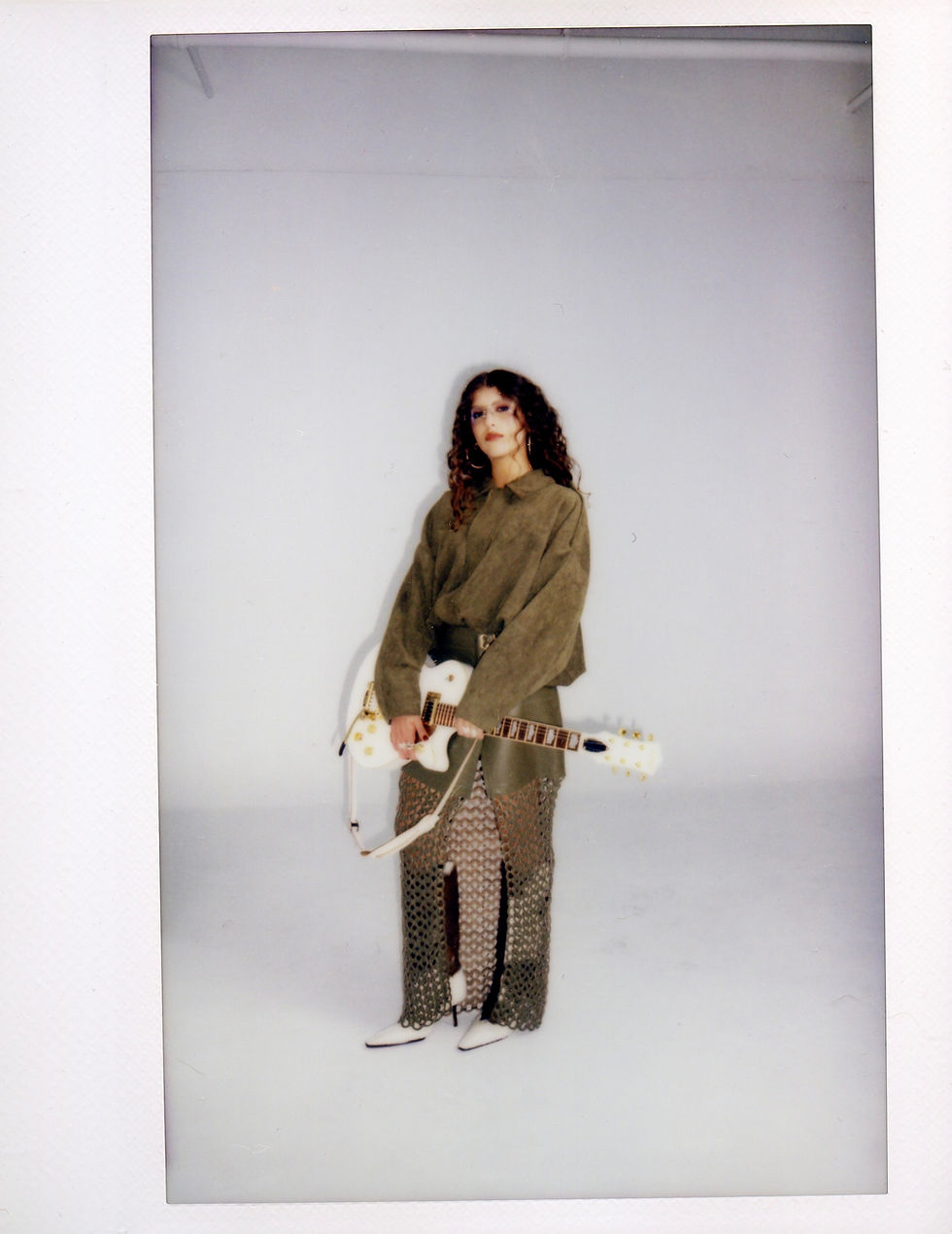
Lindsey Lomis is a singer, songwriter and guitarist born and raised in Nashville, Tennessee, and now based in Los Angeles. Raised by parents who loved live music, she grew up on free festivals, coffee-shop sets and the city's independent radio station, Lightning 100, and started playing open mics as a kid. She released her first song at 12 and wrote her early material alone in her bedroom, including "Simple Love," written at 15.
Her blend of pop, soul, folk and jazz, built on agile, nuanced vocals, has drawn comparisons to Ariana Grande and Tori Kelly, and support from artists including SZA, Tate McRae and Alessia Cara. At 17, she signed with Warner Records and went on to release projects including the EPs Daydreaming (2022) and Universe (2023) before self-releasing Handle With Care in 2024. After stepping back from touring to refine her sound with her collaborators, Lomis is now releasing music independently, including "All Over You" and "Half of Me" in 2026.
If you love Tori Kelly’s runs, Jacob Collier’s harmonies, Yebba’s soul and Olivia Rodrigo’s brutally honest heartbreak, Lindsey Lomis belongs on your playlist.

Comments